Acupuncture

What is Acupuncture?

Acupuncture is a system of medicine which developed in Asia over thousands of years and is the oldest continually practiced medicine in the world.. Acupuncture is not just the use of needles to reduce pain, but rather is a method of balancing the nervous system and organ systems in the body.
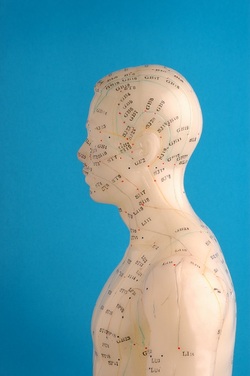
Acupuncture is based on the subtle circulation network of an enlivening force in the body called Qi. Qi circulates through the 18 meridian systems in the body, and working with this dynamic is used to help restore health in the body. Acupuncture can also be adapted to fit into the contemporary medical model of neuromuscular anatomy and pain physiology. Chinese medicine is an excellent form of preventative medicine because it provides a context in which to organize patient symptoms that usually escape attention in the standard medical evaluation.

How does acupuncture work?

Western medicine has been equated with firefighting, whereas Chinese Medicine is like a good gardener or housekeeper, restoring things to order and preventing disharmony before it arises. As a result, Chinese medicine appears to positively influence most systems in the body, and can treat a wide range of conditions.
Acupuncture involves the insertion of sterile hair-fine needles into specific points on the body. These points are reputed to access the body’s natural energy reserves, and using them in particular combinations-dependent on the patient’s condition- can greatly affect how energy is used and distributed in the body.

There are numerous modern medical theories about how acupuncture works. Some of them are:

  • Acupuncture stimulates the flow of pain-relieving endorphins  and opioids
  • Acupuncture influences the release of neurotransmitters, substances that transmit nerve impulses to the brain
  • Acupuncture influences the autonomic nervous system and immune system
  • Acupuncture stimulates circulation, influencing the blood concentration of cholesterol, phospholipids and triglycerides
  • Acupuncture influences the electrical currents of the body, influencing the transfer of electrical energy between normal and injured tissues
  • Acupuncture activates non-nociceptive signals in the dorsal horn, “gating out” painful stimuli
Research done on acupuncture has shows that it changes blood flow in the brain, stimulates the central nervous system, affects hormone release, and influences the body’s ability to self regulate, some of which lead to a sense of well being. Acupuncture alters brain chemistry in a positive way. Acupuncture points act as conductors of electromagnetic signals that, when stimulated, can start a flow of endorphins and opioids. It stimulates the hypothalamus, limbic system, and pituitary gland, all of which are central for health and emotional well being.

Is there proof that it works?

The benefit of acupuncture treatment is well documented in Western medical journals and is widely used in medical institutions across the United States and worldwide. Because of the relatively low cost and noninvasive nature, acupuncture has become a highly popular form of complementary health care.

There are many conditions recommended for Acupuncture by the World Health Organization (W.H.O.).  For a full list of these conditions visit: World Health Organization

For more information on how acupuncture works and for research on its effectiveness visit: NCCAOM Information and Resources Package

“The data in support of acupuncture are as strong as those for many accepted Western medical therapies…There is clear evidence that needle acupuncture is efficacious for adult postoperative and chemotherapy nausea and vomiting and probably for the nausea of pregnancy… There is reasonable evidence of efficacy for postoperative dental pain… reasonable studies (although sometimes only single studies) showing relief of pain with acupuncture on diverse pain conditions such as menstrual cramps, tennis elbow, and fibromyalgia…” ~National Institute of Health, consensus statement

Does acupuncture hurt?

Most patients state that there is little to no pain as the very fine, sterile, disposable needles are inserted. You may feel a slight pricking, numbness or heavy sensation in the area around the needle at first. These sensations usually last only a moment. Many people experience acupuncture as pleasurable and relaxing.

What are the needles like?

Acupuncture needles are small and hair-thin. They are solid, not hollow like needles used by doctors. They are so small that about 25 acupuncture needles could fit into one syringe needle. The end of an acupuncture needle is smooth and rounded. Acupuncture needles are not designed to cut the skin. Instead, when an acupuncture needle is inserted, the round edge pushes the tissue aside without cutting it.

What are the side effects of acupuncture?

One of the greatest advantages of acupuncture is the absence of serious effects associated with its use. Rarely, there may be some slight bruising around the area where a needle was placed.

How many times do I need to come for treatment?

The frequency of treatments depends on your condition and symptoms. Typically acupuncture treatments are given 1-2 times per week for a series of about 8-12 treatments. However every case is unique, and some conditions can be resolved in only one or two treatments. Elizabeth will be happy to discuss your treatment plan with you in detail at your first appointment. Treatments will be 1 hour in length, with the initial consultation usually lasting 1.5 hours.

Can you treat my ___________ condition?

Acupuncture and Chinese herbal medicine can be used to treat many types of health conditions. Acupuncture works with the nervous system to create a regulatory function in the body, promotes blood circulation, and enhances the immune system. It stimulates the release of natural opiates in the body, thereby relieving stress and pain. Acupuncture has a powerful ability to heal imbalances in the body, so that the body as a whole is able to function more fluidly and efficiently. This allows the body to heal itself and recover quickly from disease. Acupuncture helps to harness and direct your innate healing ability so that you recover more quickly.
{

Of all of the people in my life, I feel most seen and supported by Elizabeth. She listens to, intuits, and understands her clients at a very deep spiritual, physical, as well as psychological level.  Elizabeth has supported me in listening to and following my own intuition and inner knowing, and has helped me become more whole, present and well. Her work is powerful, profoundly helpful, and healing. She has had extensive training in many different healing modalities, as well as meditation and spiritual study, and she brings all of this experience to her patients and teachings in very accessible ways.  She is a very grounded, down to earth and relatable human who practices and implements all of the techniques she uses to support her clients in her roles as a powerful healer, spiritual teacher and mother.  Elizabeth has been my primary support for recovering from multiple chronic physical issues, as well as through divorce and family of origin issues, and has helped me learn how to better ground and nourish myself in all my roles at home and at work. She nourishes my psychological and spiritual growth and continues to support my life in many profound and unexpected ways. I consider Elizabeth to be one of my greatest teachers.

— Jaime S.